Crow Intelligence

AI is just a tool.  To use it effectively, you must understand how humans think and communicate. We know the strengths of both natural and artificial intelligence and how to combine them for optimal results. By bridging cognitive science and AI, we create solutions that enhance human capabilities and ensure seamless interaction.

Our Approach

Just as a well-designed tool feels like an extension of your hand, AI should feel like an extension of human intelligence. The best AI systems are built on two key principles:

Human Cognition

Understanding human thought and language ensures AI integrates seamlessly with natural cognitive processes.

Advanced AI Engineering

Cutting-edge AI technology, designed with cognitive awareness, creates powerful and intuitive systems.

Are you interested?

✉️ hello@crowintelligence.org

Blog

  • What Money Already Bought: How Economic Narratives Rewired Our Language

    What Money Already Bought: How Economic Narratives Rewired Our Language

    Something curious happened to the English language in the 1980s. The word “privatisation” appeared in just 0.0000012% of all published words in 1940—barely a whisper in the literary landscape. By its peak, this had surged to 0.0008%—a 670-fold increase. “Incentivise” increased by 780 percent between 1940 and 2021. These numbers may seem tiny, but in the vast ocean of published language, they represent a seismic shift.

    An analysis of 200 years of published text reveals that the Reagan-Thatcher era marked the moment when economic jargon escaped the academy and colonised everyday discourse. What philosophers had suspected, data can now prove: market logic didn’t just reshape policy—it rewired how we think.


    (more…)
  • Computers Aren’t Magic: This 158-Page Book Explains Why

    Computers Aren’t Magic: This 158-Page Book Explains Why

    In our increasingly digital world, computers have become ubiquitous tools that most of us use daily without understanding their fundamental principles. Despite their complexity, the core ideas behind computing can be made accessible to anyone willing to learn.

    Article content

    Daniel Hillis’s “The Pattern on the Stone” stands as a remarkable gateway into computer science, distilling complex concepts into accessible explanations within just 158 pages. What makes this book exceptional is how it covers an impressive range of topics—from foundational Turing machines to elementary computer architectures, neural networks, and parallel computing—without requiring prior technical knowledge.

    (more…)
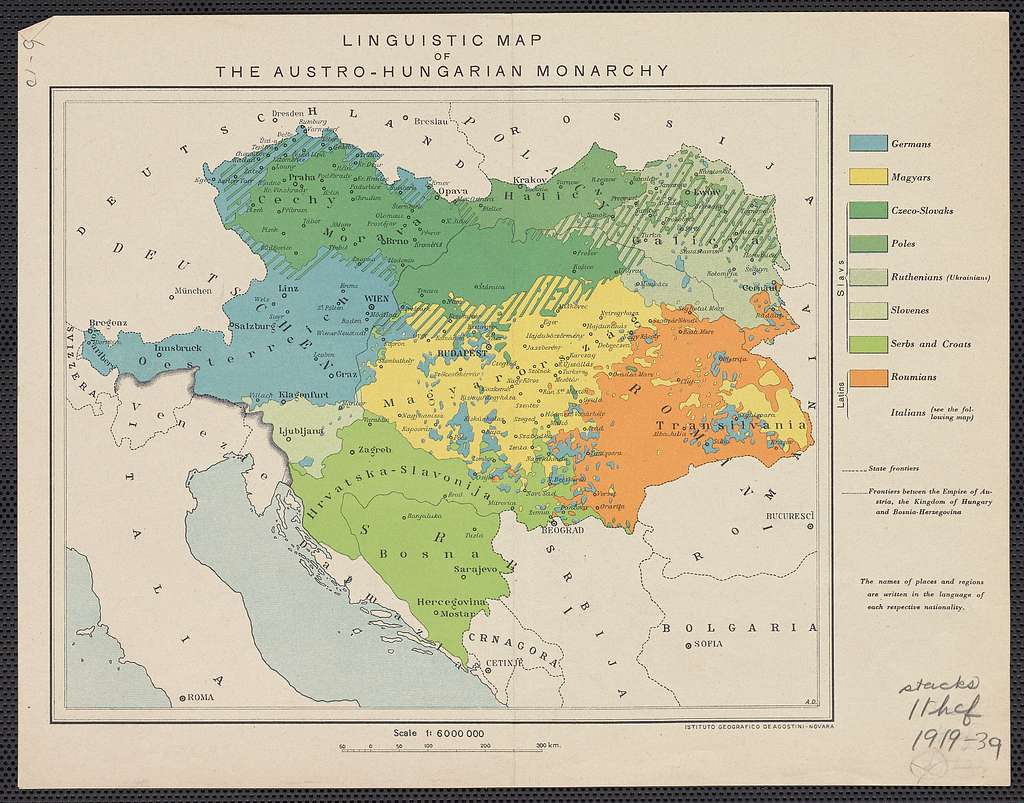
  • How Central Europe Created the Modern World: The Habsburg Intellectual Revolution

    How Central Europe Created the Modern World: The Habsburg Intellectual Revolution

    I recently found myself reflecting on Central Europe’s intellectual legacy after a conversation with an old friend who moved his business to New York. His decision made me wonder: could our region once again become the kind of intellectual powerhouse it was a century ago? This question led me to explore the extraordinary concentration of genius that emerged from Central Europe in the late 19th and early 20th centuries – a flowering of thought that fundamentally shaped our modern world.

    The innovations that define contemporary life – from the architecture of computers to game theory, from psychoanalysis to modern economics – emerged from this small collection of nations between Germany and Russia. While these contributions are often overlooked or attributed to the countries where these thinkers later emigrated, their Central European origins reveal a remarkable story about how intellectual revolutions happen.

    (more…)
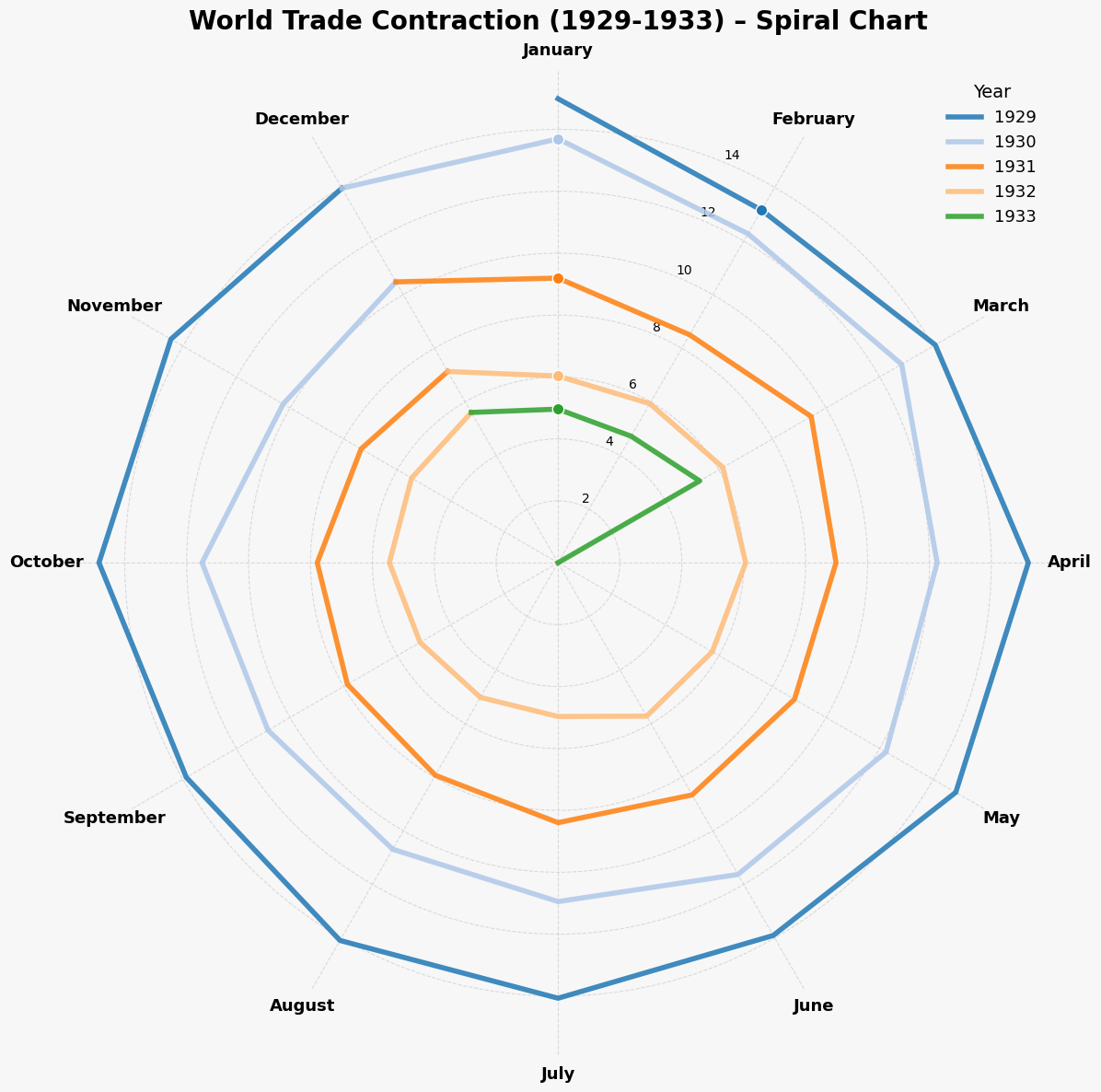
  • Visualizing Economic History: The Kindleberger Spiral and its Modern Relevance

    Visualizing Economic History: The Kindleberger Spiral and its Modern Relevance

    I recently recreated Charles Kindleberger‘s famous “spiral” chart using Python – a powerful visualization that dramatically illustrates how global trade collapsed between 1929 and 1933, resembling “water circling a drain.”

    My inspiration came from a fascinating article in The Economist that highlighted how this decades-old visualization has gained renewed relevance in today’s discussions about trade policies and global leadership.

    (more…)
  • Narrative Wars: What Hunger Games Teaches Us About Information Control

    Narrative Wars: What Hunger Games Teaches Us About Information Control

    In his political essays, 18th-century Scottish philosopher David Hume, known for his empiricism and influential work on skepticism and political theory, made a penetrating observation about power: “Nothing appears more surprising to those who consider human affairs with a philosophical eye, than the easiness with which the many are governed by the few; and the implicit submission, with which men resign their own sentiments and passions to those of their rulers.”

    This insight – that rulers maintain control through “opinion” rather than force – seems eerily prescient in our current information landscape, where competing narratives battle for supremacy both between and within societies. With Suzanne Collins’ Hunger Games series receiving renewed attention through the release of “Sunrise on the Reaping,” we have a timely occasion to examine these dynamics through the lens of her dystopian world. Collins has explicitly cited Hume’s concept of “implicit submission” as her philosophical inspiration for the series, creating a fictional universe that takes information control to its terrifying logical conclusion.

    (more…)