Tag: Probabilistic Programming

  • Why Probabilistic Programming? A Journey Through the Monty Hall Problem

    Why Probabilistic Programming? A Journey Through the Monty Hall Problem

    Even brilliant minds can be led astray by probability puzzles. When presented with the Monty Hall Problem, renowned mathematician Paul Erdős initially rejected the correct solution – and he wasn’t alone. Thousands of readers, including PhDs in mathematics and statistics, wrote angry letters to Marilyn vos Savant when she published the correct solution in Parade magazine. Their passionate resistance reveals something fascinating about how humans reason about uncertainty.

    To explore these ideas hands-on, we’ve created a Jupyter notebook that implements both traditional and probabilistic programming approaches to the Monty Hall Problem. The notebook includes code for simulating the game, modeling player behavior, and analyzing how people learn from experience.

    (more…)

  • When Math Makes Fools of Us All How a simple game show puzzle reveals the limits of human reason—and how computers might help

    When Math Makes Fools of Us All How a simple game show puzzle reveals the limits of human reason—and how computers might help

    In 1990, a seemingly innocuous puzzle published in Parade magazine sparked what might be called the Great Probability War. Thousands of readers, including doctorate holders in mathematics, bombarded the magazine with angry letters. Their target? Marilyn vos Savant, whose solution to the “Monty Hall Problem” they declared not just wrong, but offensively wrong. Even Paul Erdős, one of the 20th century’s most brilliant mathematicians, initially dismissed her answer. They were all mistaken.

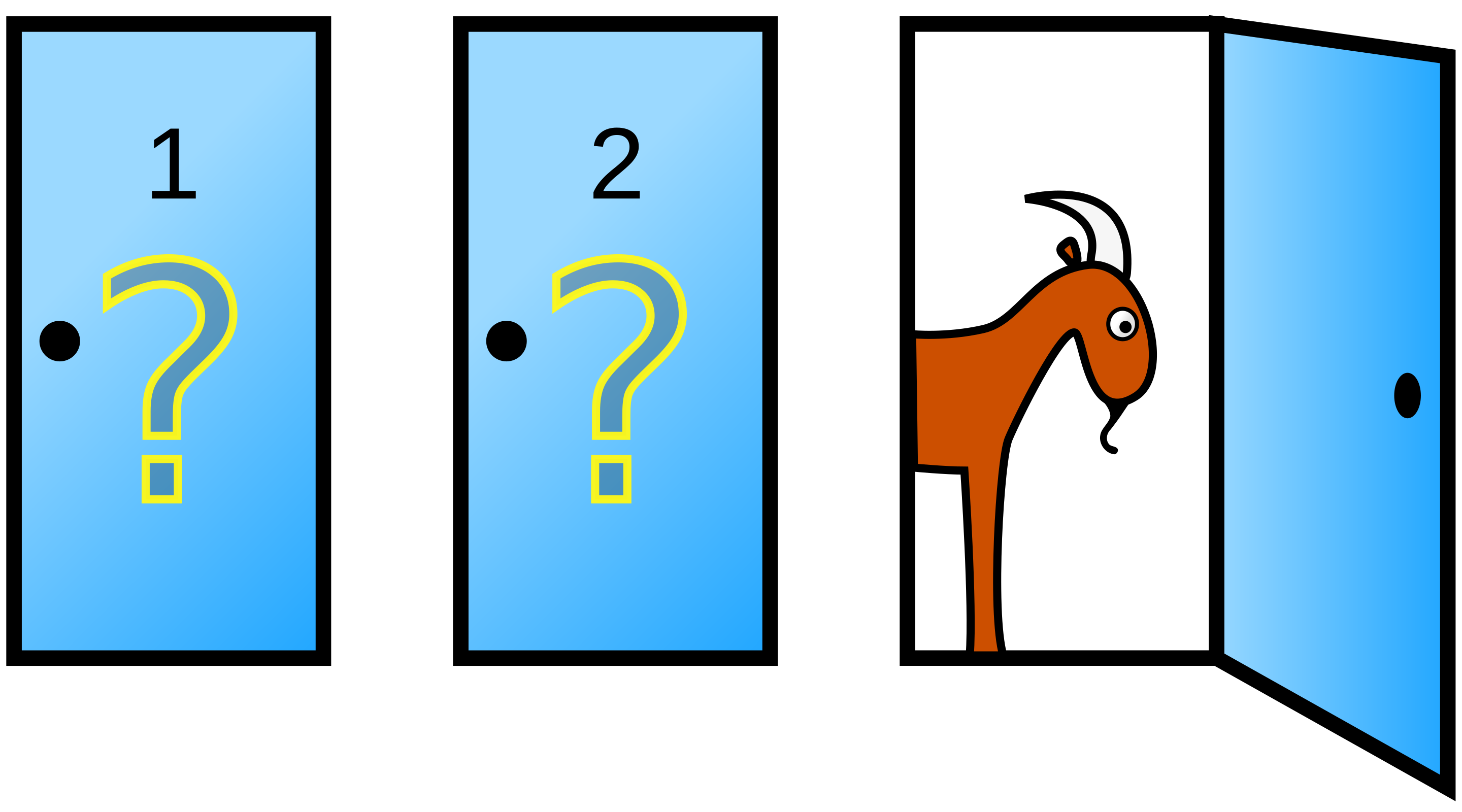
    The puzzle, based on the American game show “Let’s Make a Deal,” seems simple enough. A contestant faces three doors. Behind one is a car, and behind the others are goats. After the contestant picks a door, the host (who knows what lies behind each) opens another to reveal a goat. Should the contestant switch to the remaining door? The counterintuitive answer—that switching doubles one’s chances of winning—has been making heads spin for decades.

    (more…)