Tag: stoicism

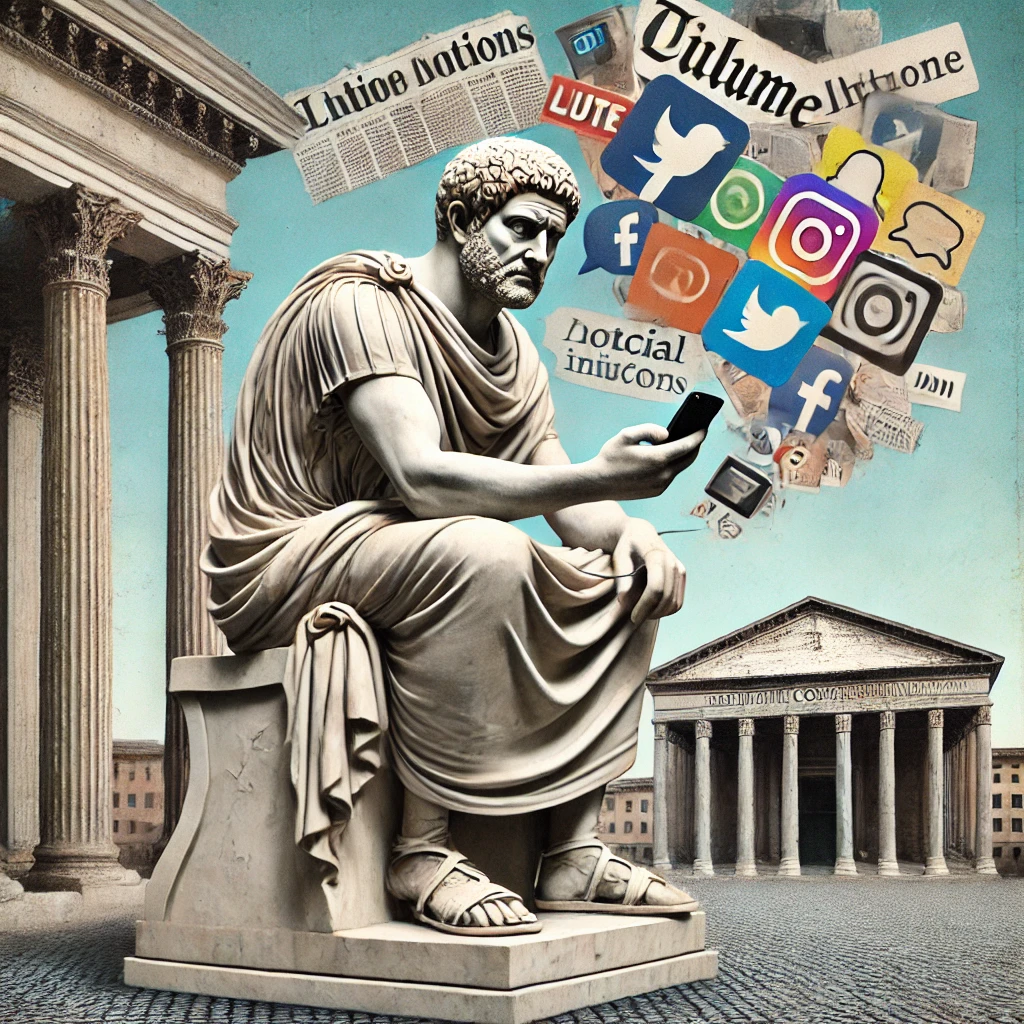
  • The Mindful Information Diet: A Stoic Approach to Modern Media

    The Mindful Information Diet: A Stoic Approach to Modern Media

    “The happiness of your life depends upon the quality of your thoughts.” This wisdom from Marcus Aurelius reminds us that attention is our most precious resource. In a world of infinite content, choosing what deserves our focus becomes an act of philosophy.

    The ancient Stoics understood that true wisdom comes not from absorbing everything, but from carefully selecting what deserves our attention. As Seneca advised, “To be everywhere is to be nowhere.” In our hyperconnected world, this warning has never been more relevant.

    What would Seneca think of our modern information landscape, where notifications ping incessantly and algorithms compete for every moment of our attention? I believe he would recognize it as the ultimate test of Stoic discipline—a constant exercise in choosing what truly matters.

    (more…)

  • Falsifiable Hypotheses: How Popper’s Philosophy Transformed My Data Science Practice

    Falsifiable Hypotheses: How Popper’s Philosophy Transformed My Data Science Practice

    WHEN a carefully designed data science initiative falters despite months of development and substantial investment, the root cause often lies not in the algorithms themselves but in epistemology—our approach to knowledge. Behind failed recommendation systems and underperforming predictive models frequently lies a common oversight: the absence of clearly defined conditions under which the underlying hypothesis would be considered disproven.

    Karl Popper formalized this as the demarcation problem: what separates genuine science from pseudoscience is its willingness to articulate the conditions under which a theory would be abandoned. This seemingly academic distinction has transformed my journey from enterprise software developer to successful startup founder, providing a robust framework for both technical decisions and business pivots.

    While technology practitioners rarely discuss philosophy of science or quote Roman philosophers, these frameworks offer practical armor against the most expensive mistakes in data science. In my experience, combining Popperian falsification with Stoic acceptance of reality creates something powerful—a methodology that ruthlessly tests hypotheses while enabling the emotional discipline to abandon failed approaches, however personally or professionally painful.

    (more…)