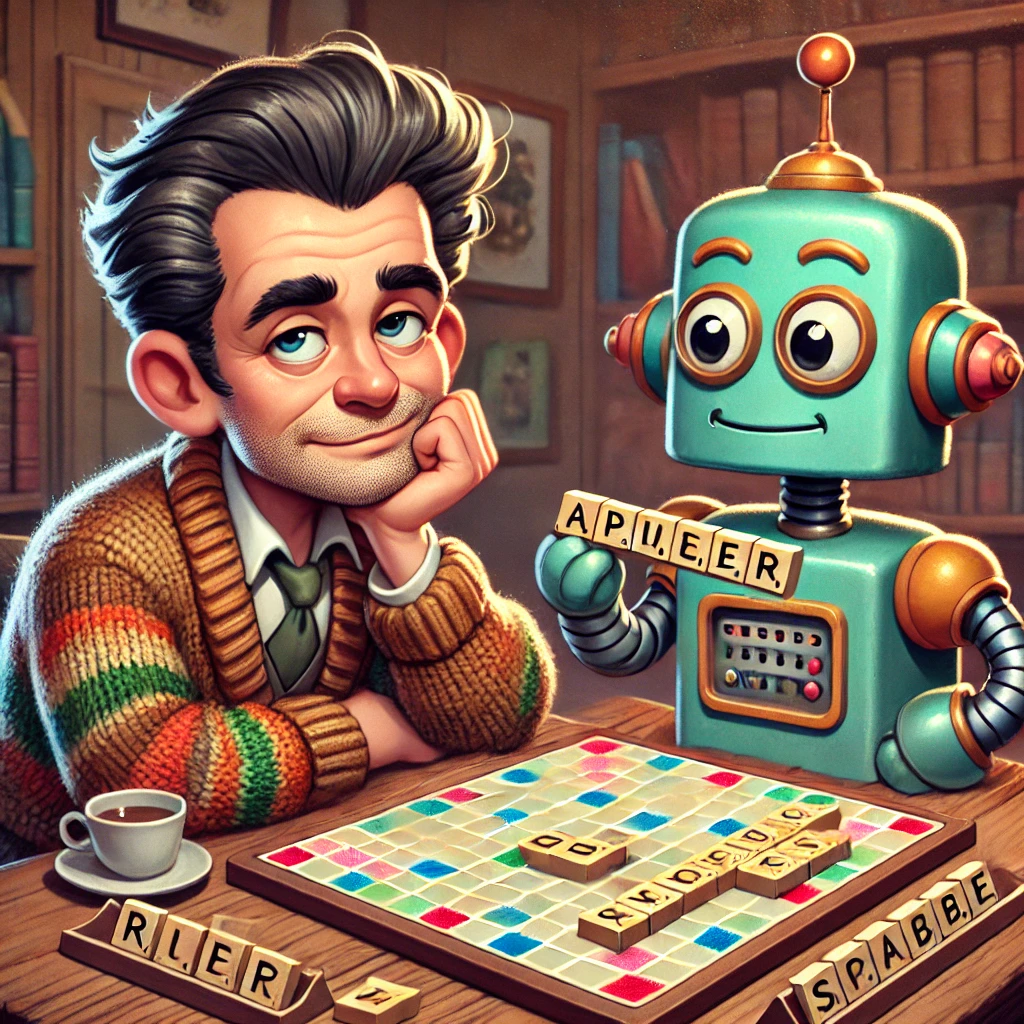
Understanding LLMs as Tools, Not Agents
In recent years, Large Language Models (LLMs) like ChatGPT have captured the public imagination with their ability to generate human-like text, leading to bold claims about machine consciousness and artificial linguistic capabilities. These claims often suggest that with enough data and computational power, machines might achieve proper language understanding comparable to humans. However, examining what human language entails reveals fundamental limitations in this perspective. Are LLMs really on the path to becoming conscious linguistic agents, or do we misunderstand the nature of language and the capabilities of these sophisticated pattern-matching systems?
In 2008, Wired editor Chris Anderson boldly claimed that big data would make the scientific method obsolete. His argument was simple but provocative: with enough data, we don’t need theories anymore – the patterns in the data tell us everything we need to know. ‘Correlation supersedes causation,’ he declared, suggesting that we can bypass the need for theoretical understanding entirely with sufficient data. This view prefigures the current enthusiasm about Large Language Models, where some researchers suggest we can capture the entirety of human language with enough text data.
However, this ‘data is enough’ perspective faces a fundamental philosophical challenge: underdetermination. Even if we could gather every instance of language use throughout human history – every conversation, every text, every utterance – we would still face an insurmountable problem. The same linguistic data can support multiple, competing theories about the nature of language itself. Just as different theoretical frameworks can explain scientific data, the patterns we observe in language use don’t uniquely determine the underlying system of language. We must examine how language works in human practice to understand why data alone isn’t enough.
The Essence of Embodied Understanding
Consider Wittgenstein’s famous example of builders using a primitive language of four words: ‘block’, ‘pillar’, ‘slab’, and ‘beam’. The meaning of these words isn’t found in their dictionary definitions or statistical patterns, but in how they’re used in practice – in the actual building process. One builder calls out ‘slab!’ and the other brings a slab. The meaning emerges from this shared activity, from the physical practice of construction and the social interaction between the builders. This simple example illustrates how language is fundamentally grounded in what Wittgenstein called ‘forms of life’ – the practical activities and social contexts that give words meaning. Our understanding of language is inextricably tied to these shared practices, physical experiences, and the real consequences of how we use words.

Language: System vs. Use
This practical understanding of language leads us to a fundamental distinction first made by Ferdinand de Saussure: the difference between langue (the abstract system of language) and parole (actual instances of language use). LLMs work exclusively with parole, trained on concrete examples of language use. But langue is something more profound – it’s the generative capacity that allows us to create novel, meaningful expressions. Just as a chef’s understanding of cooking principles allows them to create new dishes beyond their known recipes, human understanding of langue enables us to generate novel, meaningful expressions beyond our experience of parole. LLMs, in contrast, can only recombine patterns they’ve encountered, like someone who can only prepare dishes they’ve memorized recipes for.
The Dynamic Nature of Language
Language isn’t static – it’s constantly evolving as humans adapt it to their needs. A perfect example is “algospeak,” where social media users creatively modify language to avoid content moderation algorithms. When people write “unalive” instead of “dead” or “le dollar bean” instead of “lesbian,” they’re not just substituting words – they’re actively participating in the evolution of language to serve real communicative needs.
This linguistic innovation reveals a crucial distinction between examining language as a static system at one point in time (synchronic understanding) and studying how language changes over time (diachronic development). LLMs can only capture synchronic snapshots, while human language use is inherently diachronic – we actively participate in its evolution. When we create new terms or adapt existing ones, we respond to real needs and situations, not just recombining patterns we’ve seen before.
What Makes Us Human After All?
So, we return to our opening question: Does language still make us uniquely human? The development of LLMs hasn’t diminished human uniqueness; instead, it has helped us better understand what makes human language special. It’s our ability to string words together or recognize patterns and our embodied, participatory engagement with meaning-making. As we interact with these increasingly sophisticated language models, we see more clearly that true language use requires physical grounding and social participation.
This understanding aligns beautifully with the extended mind hypothesis proposed by Andy Clark and David Chalmers, which suggests that human cognition routinely extends beyond our brains to incorporate tools and technology. From this view, LLMs aren’t threatening replacements for human linguistic capacity but powerful new cognitive extensions that can enhance our unique ability to create and communicate meaning. Just as writing systems dramatically expanded our capacity to preserve and share thoughts across time and space, LLMs might augment our linguistic capabilities in new ways while remaining fundamentally different from human language use.
This perspective helps us appreciate LLMs’ revolutionary potential and what makes human language unique. These tools don’t diminish our humanity; they illuminate it. By seeing what LLMs can and cannot do, we gain a deeper appreciation for human language’s embodied, social, and dynamic nature—not just as a system for processing patterns but as a living practice that connects us to each other and our world.
Leave a Reply